Sorry guyss i forgot to tell you how to calculate the number of neutrons and atomic weight.
Well here's a little trick i use.
For elements with their atomic number even (i.e. divisible by two) just double it to get the atomic weight.
For elements with odd atomic number just double it and add one.
WARNING! THIS TRICK DOES NOT WORK WITH HYDROGEN, BERYLLIUM, NITROGEN AND ARGON!
Also to calculate the number of neutrons take the atomic weight and subtract the atomic number.
A+N=Z
Where A is the atomic number, N is the number of neutrons and Z is the atomic weight.
Hydrogen's atomic weight 1
Beryllium 9
Nitrogen 14
Argon 40.
Thursday, July 25, 2013
Sorry !

Wednesday, July 24, 2013
Electronic configurations and a lot more.
So today were gonna focus on electrons.
So in my last class I asked you why electrons revolve around the nucleus. Got the answer? Well I'm not telling you.
Electrons revolve around the nucleus in fixed paths called shells or orbits. The shells they revolve in are determined by the "power" of electrons.
There are four shells that are required for you. These shells are given names.
The first shell is called shell "K"
The second "L"
The third "M"
The forth "N"
The capacity of these shells is determined by a rule. The 2n^2 rule.
N is the number of the shell.
So the first shell has the capacity of 2 electrons.
Find the rest on your own using 2n^2 rule only then continue.
So lets talk about electronic configurations now.
The shells are arranged in the order k l m n.
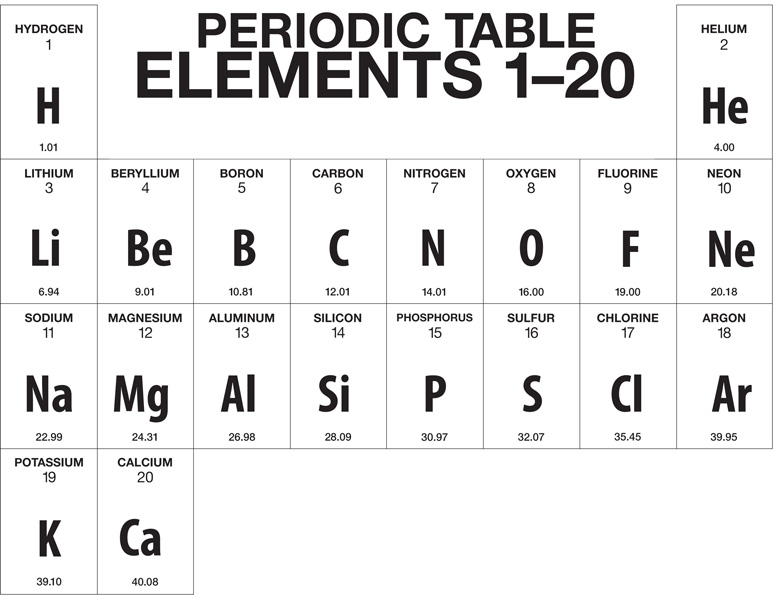
So you just have to memorise the atomic numbers. I have given the elements till 20.
1) Hydrogen
2) Helium
3) Lithium
4) Beryllium
5) Boron
6) Carbon
7) Nitrogen
8) Oxygen
9) Fluorine
10) Neon
11) Sodium
12) Magnesium
13) Aluminium
14) Silicon
15) Phosphorous
16) Sulphur
17) Chloride
18) Argon
19) Potassium
20) Calcium
You have to memorise all these. Truthfully or learning chemistry is a waste.
So for the electronic configuration you just fill up the number of electrons in the shells according to their capacity and the atomic number also you have to mention the number of protons and neutrons in the nucleus I have given a table here. Here is an
Example in the picture.
So you guys try yourself to make the configurations of all the elements till 20.
Ok so that's todays class.
P.S round off the atomic weights ok?

Tuesday, July 23, 2013
Ok its chemistry today guyss..
Ok so the basics basics of chemistry.
What is matter?
Well its easy, matter is anything that you can see and feel. Your book would say that matter is anything that has mass and occupies space. But what is mass. Well in easy terms mass is the amount of 'things ' in a body. So matter is anything that is made of things and it takes up space.
Now what is matter made up of?
Think about it only then continue.
Well matter is made up of small things called atoms. What is an atom? Well an atom is an extremely small thing that makes up matter. To give you an idea of how small it is put a full stop on a piece of paper. More than 2000000000 atoms can fit in that small dot.
Ok so what are atoms made up of?
Atoms are like the solar system. An atom consists of even smaller particles called sub atomic particles.
Protons, neutrons and electrons.
Protons have positive charge. (getting complex eh?)
Well a positive charge is the thing that pulls negative things to it.( A proton is optimistic :p)
Neutrons are like this " I don't give a damn about anything" they are completely neutral to anything. They don't attract or repel anything.
The first two things are like the sun. It lies at the heart of the atom called the nucleus.
So what are electrons?
Electrons are negative. They take everything in a negative way. The have a negative charge.
So what happens to them? They revolve around the sun (the nucleus!).
Why do you think they revolve around the nucleus?
Write in the comments below!
That's the end of todays class folks!
Monday, July 22, 2013
Ask Questions and i will try to answer
Ask your help topic and questions in the comments.
Questions will be answered every day.
(Only for students till grade 10)
JUST A HELP SITE!
This is where i give some help on understanding topics in science and mathematics.
I am not an expert. I just give my views on the topics undertaken.
Subscribe to:
Posts (Atom)